
Arrest Records Across Kentucky
A Kentucky arrest can begin with a Kentucky State Police trooper, county sheriff, city or metro police officer, campus officer, or another peace officer. The arresting agency creates the incident or arrest report. A receiving county jail, jailer, or regional detention center creates intake, custody, fingerprint, photograph, bond, and release records. These source records remain with the offices that made or received the arrest.
Kentucky State Police operates statewide and keeps records from its own police work, but it is not a live clearinghouse for every local booking. A sheriff's records office, separate jailer, detention center, or city police records unit may hold the newest detail. Kentucky arrest records can thus surface in a booking roster, an agency report, a District Court case, and a KSP criminal history at different times.
Kentucky Arrest Agency Routes
Request the Kentucky arrest record from the office that created it. Kentucky State Police handles KSP incident records and provides a separate crash-report channel. Kentucky county sheriffs keep records for their own enforcement work, while the jailer or detention center may separately control the booking file. Kentucky city and special police departments use their own records custodians. One request cannot force KSP to produce a Kentucky city-police narrative it never received.
| Agency type | Kentucky role | First records route |
|---|---|---|
| Kentucky State Police | Statewide jurisdiction, posts, highway and criminal investigations | KSP records custodian or official crash channel |
| County sheriff | County policing, service, and court security; jail role varies | Sheriff records office |
| City or metro police | Municipal arrest and incident work | Department records unit |
| Jailer or detention center | Booking, custody, prints, bond, and release | Local roster, telephone, or records request |
| Campus or special police | Defined institutional or statutory jurisdiction | Originating agency custodian |
The KSP Civilian Collision Reporting portal illustrates why Kentucky record channels are purpose-specific:
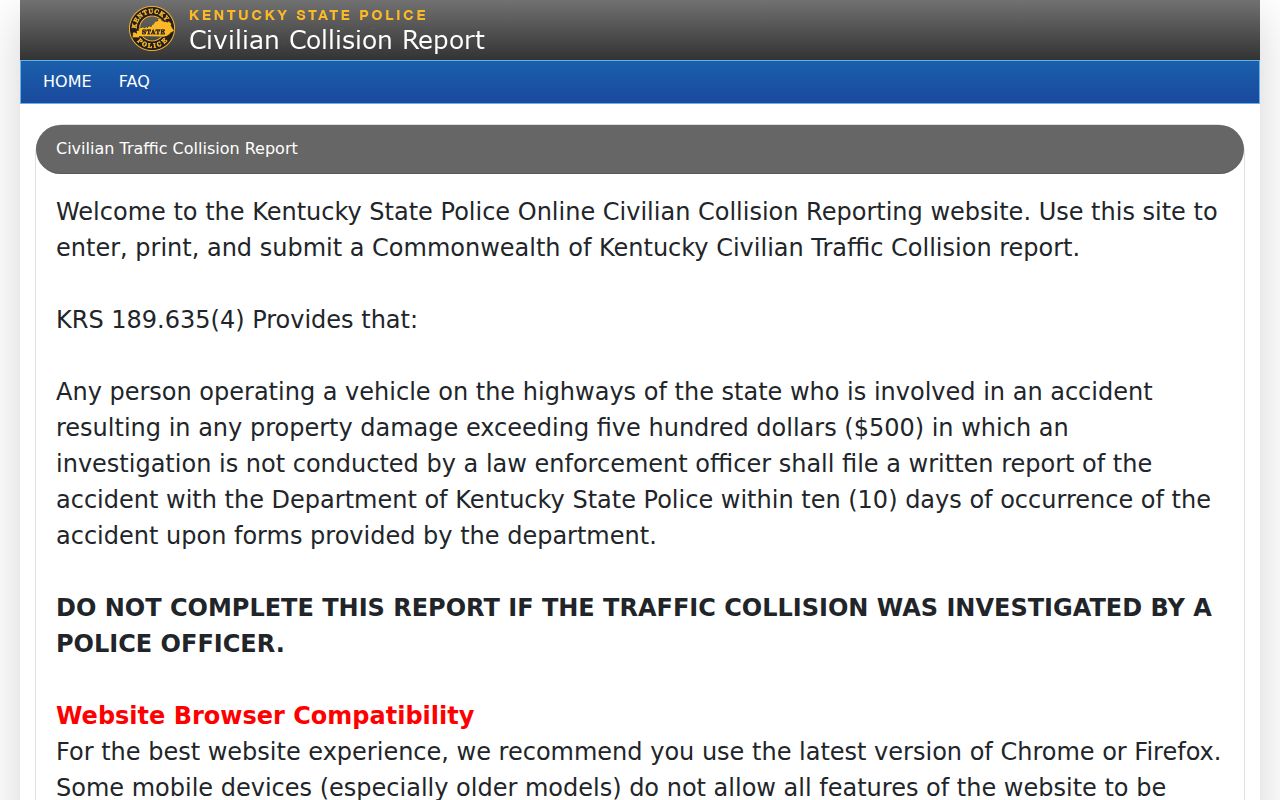
A collision form belongs in its dedicated channel, just as an arrest narrative belongs with the police agency that created it.
From Kentucky Arrest to Rap Sheet
Kentucky's reporting chain uses fingerprints and statewide offense and disposition forms to connect an arrest cycle to a person. KRS 441.046 requires fingerprints for qualifying arrested people before release and transmission to KSP for review. The UOR-1 supplies offense information. Later, a UOR-3 court disposition can report whether the charge was convicted, dismissed, amended, acquitted, or otherwise resolved.
Data flow: Arrest › Booking › Fingerprint Submission › Kentucky State Police › Court Disposition
Each Kentucky arrest stage has its own timing. A new Kentucky booking may appear locally before a court case or KSP entry exists. Paper records, unmatched identifiers, and late disposition reporting can also cause the Kentucky county roster, CourtNet summary, and KSP criminal history to differ. The local Kentucky arrest file proves that an arrest event was recorded. It does not by itself supply the judicial outcome.
Finding a Recent Kentucky Arrest
For a recent Kentucky arrest, identify the county and arresting agency first. Search or call the Kentucky county jail for current custody. Then request the Kentucky arrest or incident report from the police office that created it. Active-investigation material, juvenile information, victim details, intelligence, and personal identifiers may be withheld or redacted under Kentucky law.
- Check the county jail or regional detention center for a current booking, bond, or release entry.
- Request the report from the arresting sheriff, police department, KSP post, or special agency.
- Check District Court or a statewide AOC report for charges filed after the arrest.
- Use KOOL only when state custody or state supervision is plausible, then use VINE when custody alerts are the goal.
- Reconcile the arrest with the final county court disposition and one's own KSP criminal history when needed.
Browse the directory of all 120 Kentucky counties to reach local jail, sheriff, police, and clerk channels. County interfaces, archive depth, and release practices differ, so one metro roster should never stand in for the entire state.
Kentucky Arrest Lookup Options
A broad Kentucky arrest search uses multiple official routes. Start locally for a recent Kentucky booking. Use the Kentucky AOC court-report channel when filed charges and dispositions matter. Review one's own fingerprint-linked KSP history for the Kentucky repository view. If the person is serving a Kentucky state sentence or is under KDOC supervision, search Kentucky Offender Online Lookup. None of these Kentucky systems alone contains the entire arrest story.
- Choose the county where the arrest occurred and check its booking or custody source.
- Use the complete legal name and date of birth when the official form requests identifiers.
- Order an AOCFastCheck or One-Time report to identify filed Kentucky court cases across all counties.
- Read the arrest entry beside the case disposition because an arrest does not establish conviction.
KSP also publishes Crime in Kentucky and traffic data, which describe statewide patterns rather than identify a person's arrest:

The publication source is useful for statewide context, but it cannot replace a county booking record or individual court case.
Kentucky Custody Search Limits
Kentucky county jails hold many people awaiting trial and many shorter sentences. The Kentucky Department of Corrections holds sentenced Kentucky prisoners and supervises probation and parole. A person can move from a Kentucky county booking to state custody only after the needed commitment process. That Kentucky custody split explains why a current jail record may not appear in KOOL.
The KDOC guidance for KOOL states that data is updated daily and warns that recent information may not be final:
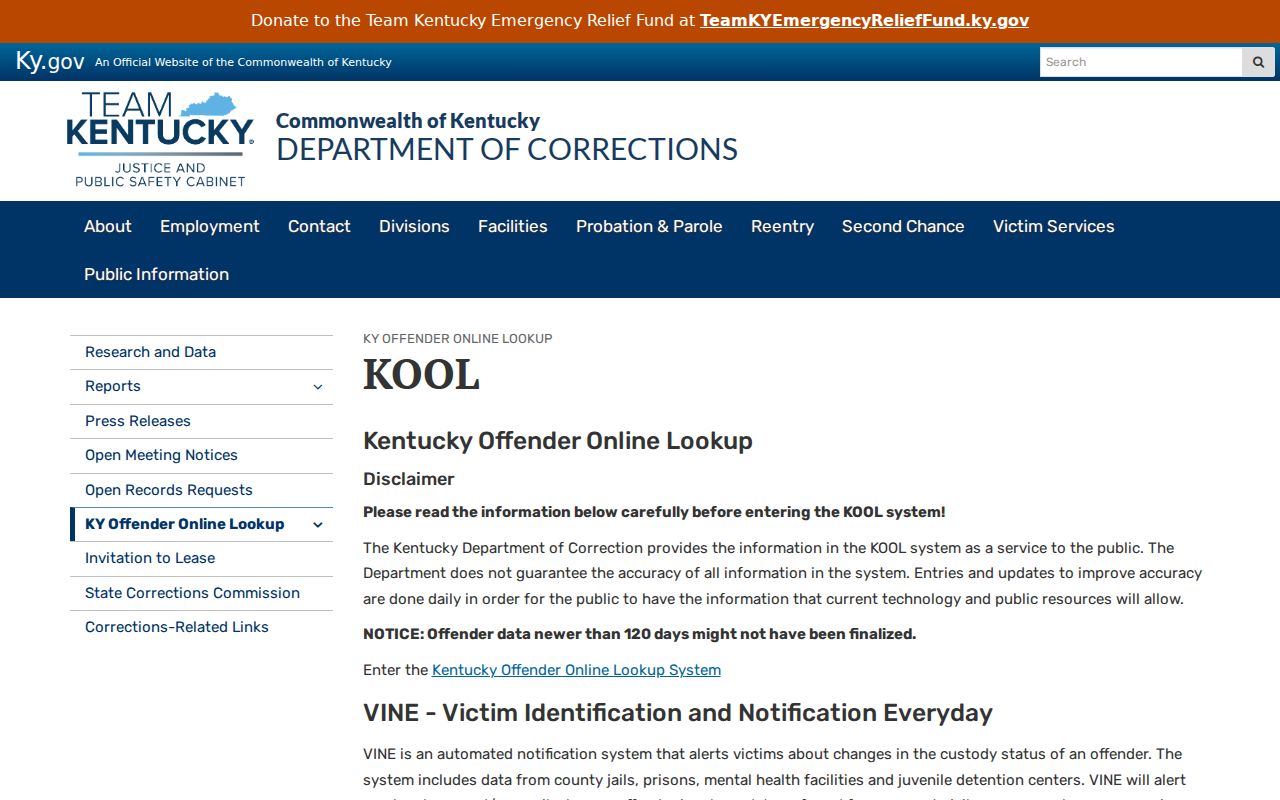
KDOC cautions that offender data newer than 120 days may not be finalized, so dates and statuses should be verified before relying on them.
KOOL can search names and aliases, PID or DOC numbers, supervision status, location, county of supervision, age, race, gender, offense terms, KRS numbers, indictment identifiers, conviction county, and date ranges. Its detail view may include a photograph, physical description, current institution or field office, conviction and sentence facts, parole review dates, and projected release calculations. Those dates are administrative estimates, not promises of release. A generalized offense category in a result is also not necessarily the exact crime label. The county judgment remains the better source for the precise conviction text.
VINE serves a different purpose. It covers Kentucky county jails, prisons, mental-health facilities, and juvenile detention centers, and can send notifications for release, transfer, escape, and an upcoming parole hearing. The official VINE service shows the custody notification interface:
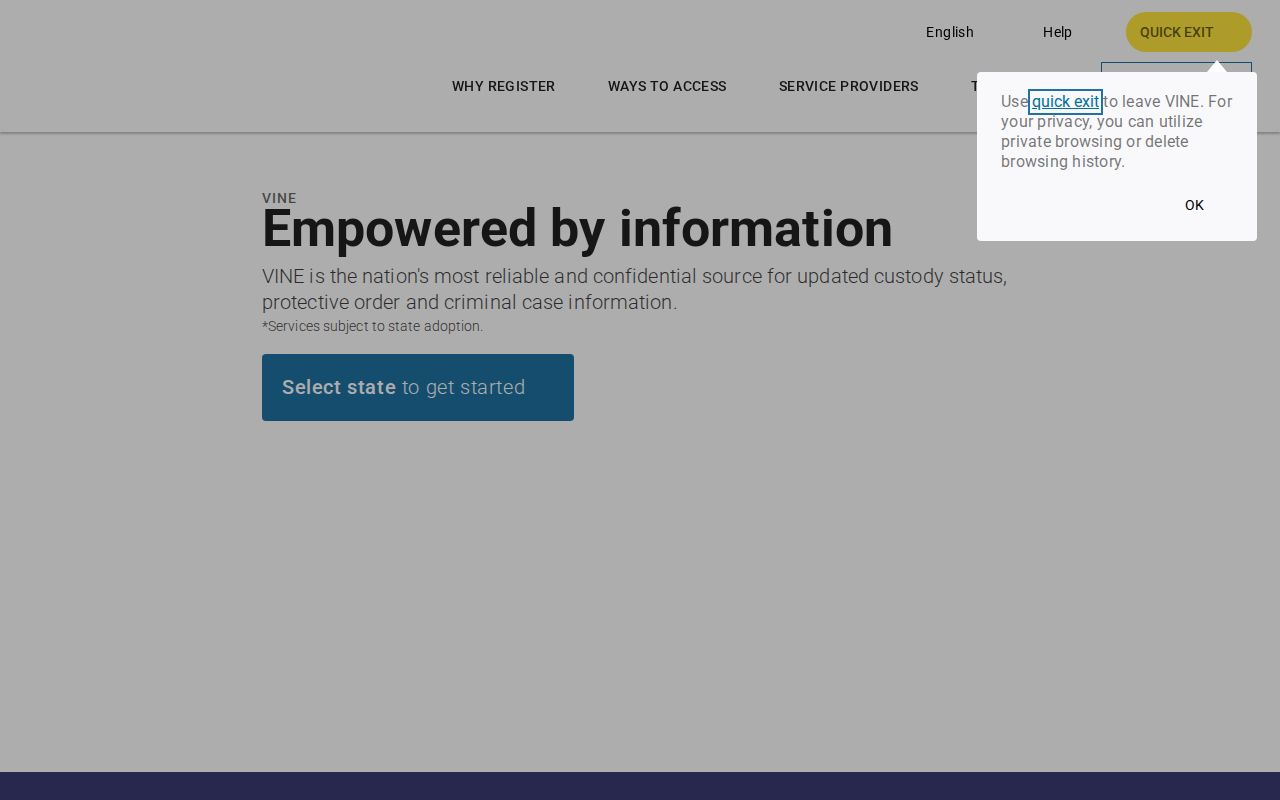
VINE alerts a subscriber to custody changes; it is not the source arrest report or the final Kentucky court record.
Fields on a Kentucky Arrest Record
A Kentucky arrest record can combine identity, event, agency, charge, and custody details. The exact Kentucky fields depend on whether the source is a police report, uniform citation, jail booking sheet, court summary, or KSP history. Kentucky charge labels reflect allegations at that stage and may change when prosecutors file, amend, or dismiss a court charge.
| Name & Identifiers | Current name, aliases, birth date, physical descriptors, and agency identifiers where lawfully shown. |
|---|---|
| Arrest Event | Date, time, place, citation or tracking number, transport, and warrant indicator when recorded. |
| Arresting Agency | The Kentucky sheriff, police department, KSP unit, or special agency that made the arrest. |
| Charges at Booking | Alleged offense descriptions, KRS citations, and severity as recorded at intake. |
| Booking Record | Booking number, custody reference, fingerprints, and photograph where authorized for release. |
| Bond & Release | Bond or release data and available court information, subject to later change. |
The record does not, by itself, prove guilt. It may not show a prosecutor's later choice, an amended count, the final judgment, or expungement action. Those facts require the Kentucky court file and the proper state record channel.
Reading Kentucky Arrest Statistics
KSP's Crime in Kentucky program publishes Kentucky Uniform Crime Reporting and NIBRS material from reporting agencies. Its Kentucky tables need careful labels. Incidents, offenses, arrests, and estimated crime are different measures. A final Kentucky annual report also differs from a partial live year. Kentucky agency participation and later revisions can affect statewide totals.
The KDOC research and statistics collection supplies a separate corrections view:
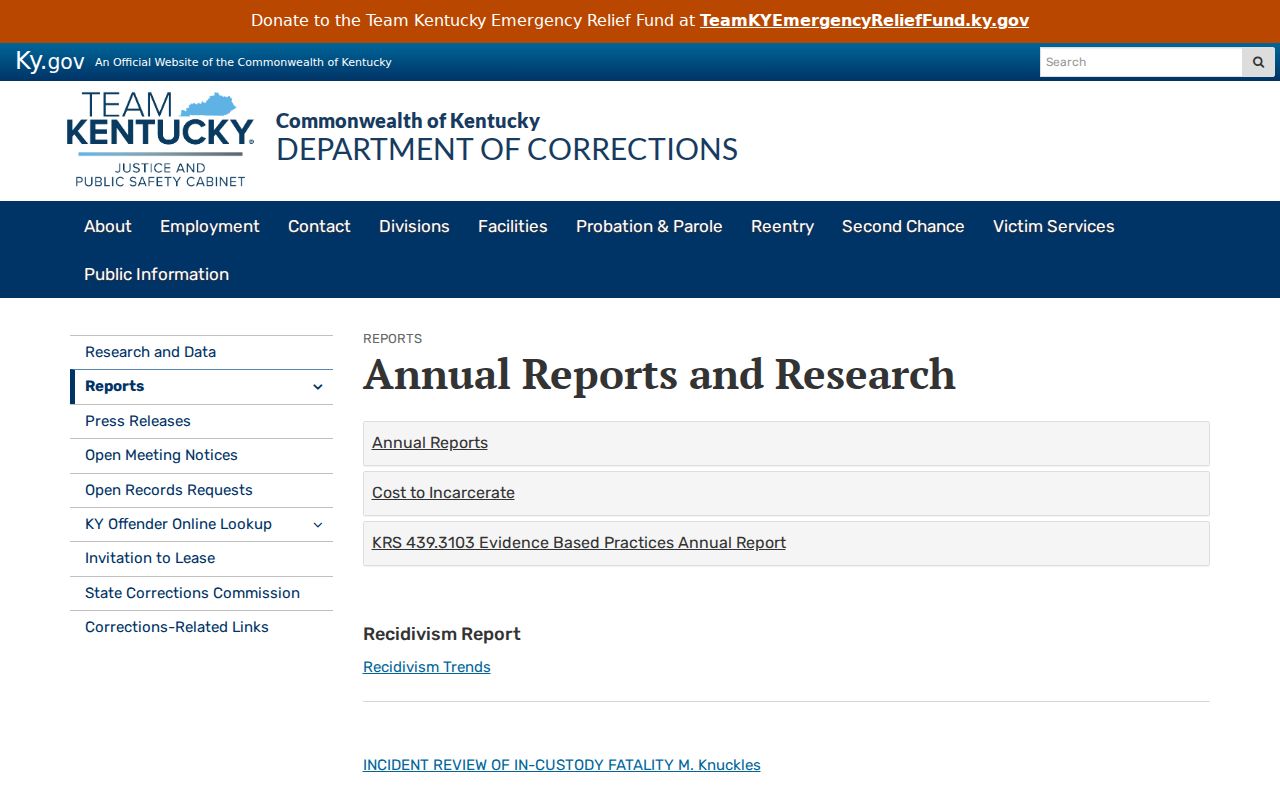
KDOC population and annual-report data describe people in corrections systems, not a count of every Kentucky arrest made by police.
Correcting a Kentucky Arrest Cycle
When an arrest appears but the dismissal or other outcome does not, start with the county court file. Confirm the case number and obtain the disposition from the circuit court clerk. Court data can then be addressed with AOC through its correction path. A missing or wrong fingerprint-linked repository disposition should be challenged through KSP's personal record review process.
The Kentucky Open Records Act can reach an identifiable, nonexempt record held by the agency that created it. It does not override confidentiality rules. Nor can it make one office produce another agency's file. A city-police narrative belongs with that department. A jail booking belongs with the jail custodian. A signed order belongs with the county clerk. KSP controls its centralized history.
Note: Match the correction request to the Kentucky office that owns the disputed arrest, court, jail, or repository field.
Kentucky Arrests and Convictions Compared
A Kentucky arrest records an allegation and custody event. A Kentucky conviction is a court judgment of guilt by plea or adjudication. Kentucky dissemination rules can treat conviction and nonconviction criminal-history information differently. A booking entry may remain useful for finding a case, but it cannot answer whether the charge was dismissed, amended, acquitted, diverted, or convicted.
| Point | Arrest record | Conviction record |
|---|---|---|
| Created by | Arresting agency and receiving jail | Kentucky court judgment, later reported to relevant systems |
| What it establishes | An arrest allegation and custody event | Guilt established by plea or adjudication |
| Best source | County jail and originating police agency | Official county court file and repository history |
| Relief | Eligible cases may follow Kentucky expungement law | Relief is limited to eligible convictions and statutory conditions |
Note: A Kentucky arrest with no disposition is not proof of guilt; verify the result in the county court case.