
Kentucky Criminal History Checks
Kentucky has no single public search that returns every arrest, booking, court filing, conviction, prison term, and fingerprint-linked event. Start with the record type. Kentucky State Police, or KSP, handles the central criminal-history repository. The Administrative Office of the Courts provides CourtNet reports through AOCFastCheck and One-Time Request. County clerks hold signed court files. Arresting agencies and jails keep the freshest local arrest and custody detail.
Use a complete legal name, date of birth, aliases, and a known county or case number when the official form requests them. A name match is not the same as a fingerprint match. Review dates, counties, charges, and dispositions together before treating two entries as the same person.
- Choose KSP personal review or a permitted adult name request for centralized Kentucky history.
- Order an AOC CourtNet report when the goal is a statewide summary of qualifying court cases.
- Use the Kentucky county directory for an arrest report, jail entry, signed judgment, or local warrant source.
- Check KOOL for selected state custody or supervision facts, and use the KSP registry for public registration information.
- Ask the originating office for a certified copy or correction when the record will be used as proof.
Why Kentucky Records Disagree
A Kentucky record moves through several hands. An officer creates an arrest or citation. A jail captures booking data and qualifying fingerprints. KSP links the arrest cycle to an identity. District or Circuit Court records the case. The circuit court clerk then reports the result so the KSP history can show whether the charge ended in conviction, dismissal, amendment, acquittal, or another disposition.
Timing and identifiers can break that chain. A late UOR-3 disposition, an unmatched tracking number, or an older paper file can leave the repository incomplete. CourtNet may show a filed case that never had a matching fingerprint submission. A jail roster may be current while both statewide systems lag. The fix is to compare the KSP history, CourtNet summary, clerk's signed file, and the record held by the arresting agency.
Kentucky record flow: Arrest → Booking and fingerprints → County case → Disposition → KSP rap sheet.
The Criminal History Repository in Kentucky
The Kentucky State Police Criminal Identification and Records Branch, Records Section maintains the centralized criminal-history system. KRS 17.147 directs KSP to collect criminal-history information and establish security and reporting procedures. The repository holds identity information, fingerprint-linked arrest cycles, charges, and reported court results. It does not own every police narrative or signed judgment created across Kentucky.
KSP does not provide an unrestricted instant public name database. Its public route is a mailed or walk-in name-based request for an adult record with the subject's permission. The current general fee is $20, and KSP reports an average mail time of ten business days. A personal review is the right first step for someone checking or correcting their own repository history. The specialized KSP criminal history checks page covers each official product and challenge route.
Kentucky Fingerprint Check Routes
Fingerprint-supported Kentucky and FBI checks use IdentoGO by IDEMIA when a Kentucky agency or organization has statutory authority and gives the person the correct service code. The code controls the program and destination. There is no safe universal price because state, federal, and capture charges differ by authorized program. A local law-enforcement agency that rolls prints may add up to $10.
For a direct personal federal review, the FBI Identity History Summary costs $18 through the Electronic Departmental Order route or by mail. It covers the requester's own national fingerprint history. It does not replace a Kentucky court judgment. KCHIRP delivers statutory Kentucky-and-FBI results to the authorized agency, while a person seeking self-review should use the KSP or FBI subject-only channel that matches the question.
The KSP background-check product page shows the current routes and temporary Records Division location. Its live instructions should control forms, fees, and in-person details.
Record Systems Across Kentucky
Kentucky's statewide systems answer different questions. CourtNet reports summarize qualifying judicial cases from all 120 counties. KOOL publishes selected Kentucky Department of Corrections custody and supervision data. The KSP Sex Offender Registry publishes the fields allowed by statute for people with a current registration duty. KSP's central repository compiles fingerprint-linked criminal-history cycles. None is a universal substitute for the local original.
| System | What It Holds | Run By |
|---|---|---|
| KSP name-based and personal review | Centralized Kentucky criminal-history information | Kentucky State Police |
| AOCFastCheck and One-Time Request | CourtNet summaries from 120 counties | Administrative Office of the Courts |
| Kentucky Offender Online Lookup | Selected state custody and supervision records | Kentucky Department of Corrections |
| KSP Sex Offender Registry | Statutorily published registration profiles | Kentucky State Police |
Each result should point back to its source. The clerk can certify a judgment. The arresting agency can answer for its report. KSP can address a repository field. KDOC can explain a KOOL status.
Kentucky Registry Safety Records
The Kentucky State Police Sex Offender Registry is a separate public-safety system, not a general criminal-history search. It supports name and location searches, public profiles, ZIP or individual alerts, and an official path for reporting a possible error. KRS 17.580 defines what KSP may publish and excludes victim identity, DNA, fingerprints, Social Security numbers, and government identification numbers from the public site.
Kentucky uses 20-year and lifetime registration periods rather than a public three-tier risk label. A profile's compliant status describes reported registration compliance. It is not a new court finding and does not rate future risk. The underlying conviction and judgment still belong to the court file.
Use the Kentucky sex offender lookup for the statewide search, then route an address or registration question to the appropriate Division of Probation and Parole office. KSP warns that registry information may not be used to harass, threaten, intimidate, or confront a listed person.
Kentucky Custody and Warrants
County jails hold most new bookings and pretrial custody records. KOOL is not a complete real-time county jail roster. It is the public lookup for Kentucky Department of Corrections custody and community supervision, and KDOC warns that entries newer than 120 days may not be finalized. Search fields can include name, alias, PID or DOC number, approximate age, offense, KRS code, conviction county, and date ranges.
The KDOC facility directory is the source for the current state institution list.
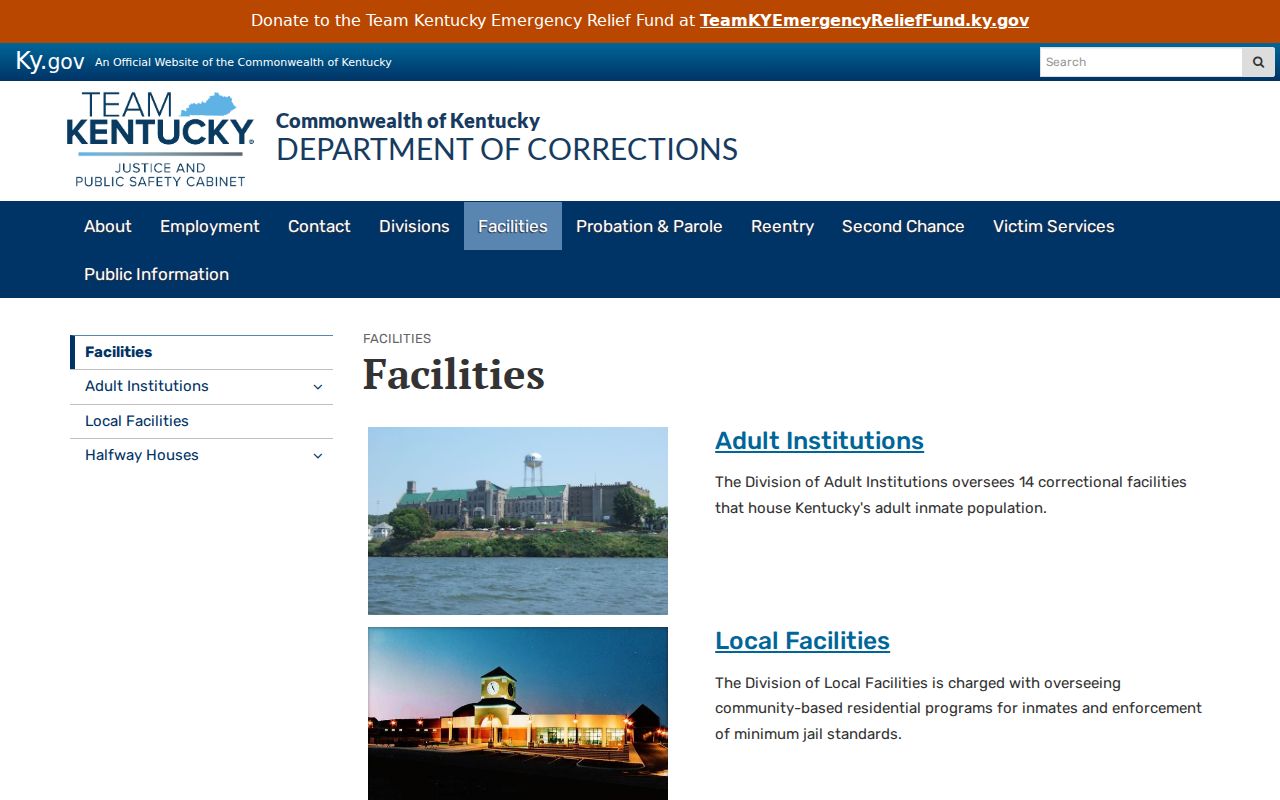
The directory separates state institutions from county detention centers, which remain local record sources.
Kentucky also lacks an authoritative public statewide warrant search covering every court. The issuing court and the sheriff or police agency responsible for service hold the operative record. Public detail may be limited when disclosure would harm an active matter. A person addressing their own possible warrant should contact the relevant clerk or law-enforcement agency and avoid relying on a third-party name list.
Kentucky Criminal Record Types
The term criminal record can refer to files created at different stages. The source controls both the meaning and the access rule. Kentucky users should keep these categories separate:
- Arrest and booking records: The arresting agency writes the incident record, while the receiving county jail records custody, charges, bond, and release.
- Court case files: District and Circuit Courts create dockets, orders, judgments, and financial entries maintained by the circuit court clerk.
- KSP rap sheets: The repository links identity, qualifying arrests, charges, and reported outcomes under Kentucky dissemination rules.
- Corrections records: KDOC records prison sentences, locations, release calculations, parole, and probation, while KOOL publishes only selected fields.
- Registry records: KSP publishes allowed registration data for safety awareness; a listing is not proof of a new offense.
- Disposition
- The recorded way a charge or case ended.
- Indictment
- A grand jury's formal felony accusation, not proof of guilt.
- Expungement
- A statutory process that removes eligible Kentucky records from normal official public results after the required orders are carried out.
- PID or DOC number
- KDOC identifiers used in KOOL; a supervised person may have a PID without a DOC number.
Kentucky Police Report Access
KSP responds only for records it created or holds. A city police report stays with the city department, and a sheriff report stays with the sheriff. KSP accepts written open-records requests through NextRequest and by its listed mail, email, fax, and hand-delivery channels. The agency states that a written decision is generally due within five business days, excluding weekends and holidays. Released paper is generally ten cents per page, while photos and other media are generally $2 to $3.
Crash reports follow narrower rules. KRS 189.635 limits eligible recipients, and 502 KAR 15:010 sets $5 for a paper copy or $10 through the KSP website. A qualifying civilian collision not investigated by an officer must be submitted through the state portal within ten days when property damage exceeds $500.
The official KSP crash-report page identifies the ordering route.
The source shows that a traffic collision report is not an unrestricted criminal-history search.
Kentucky Offense Class Clues
Classification helps identify the correct court and the possible general range, but it does not reveal the actual result. Kentucky Circuit Court handles felonies and capital cases. District Court handles misdemeanors, violations, traffic matters, and felony preliminary proceedings. A CourtNet report may display F, CR, M, or T case types, while KOOL can use broader offense descriptions.
| Class | General imprisonment range | Primary court |
|---|---|---|
| Class A felony | 20 to 50 years, or life | Circuit Court |
| Class B felony | 10 to 20 years | Circuit Court |
| Class C felony | 5 to 10 years | Circuit Court |
| Class D felony | 1 to 5 years | Circuit Court |
| Class A misdemeanor | Up to 12 months | District Court |
| Class B misdemeanor | Up to 90 days | District Court |
Enhancements and offense-specific laws can change those general ranges. Read the current offense statute and the final judgment before drawing a conclusion.
Kentucky Record Access Laws
The Kentucky Open Records Act presumes access to nonexempt agency records, but it does not override every confidentiality law. Criminal-history dissemination, judicial records, corrections files, registry fields, active investigations, juvenile matters, victim data, and security information each have separate limits. The office that created the record is usually the right first custodian.
The Kentucky Attorney General open-records resources explain agency requests and review of denials.
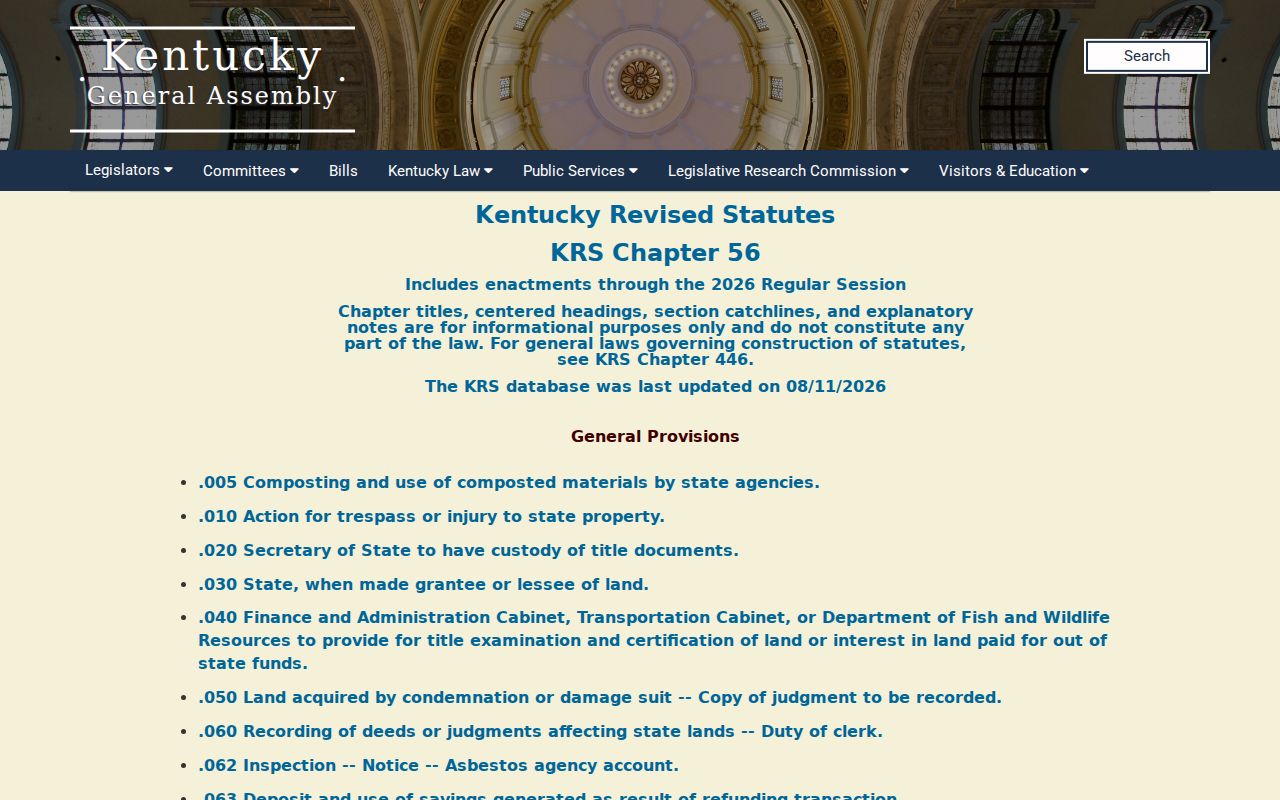
The guidance confirms that access depends on the custodian, the requested record, and any specific exemption.
Key Kentucky authorities:
KRS 61.870 through 61.884 sets the Open Records Act request and appeal framework.
KRS 17.150 and 502 KAR 30:060 control criminal-history categories and dissemination.
KRS 26A.200 through 26A.220 and court policy govern judicial access while the circuit clerk keeps the official case.
KRS 197.025 permits limits on specified corrections records and security-sensitive material.
Kentucky Expungement Record Changes
Expungement is not a database edit requested from KSP. It begins with an AOC certification and a filing in the county where the charge or conviction arose. The certification costs $40 and is valid for filing for 30 days. Eligible felony relief generally requires the listed Class D offense and at least five years after sentence completion or successful supervision, whichever is later. A felony application carries a $50 filing fee and another $250 if relief is granted.
Qualifying acquittals and dismissals with prejudice entered on or after July 15, 2020 are automatically expunged after 30 days unless the defendant objects. Other paths have different forms and timing. A judge grants relief. The clerk then distributes the order to KSP, the arresting agency, jail, prosecutor, and other named agencies.
The Kentucky Court of Justice expungement page supplies the current certification and filing process.
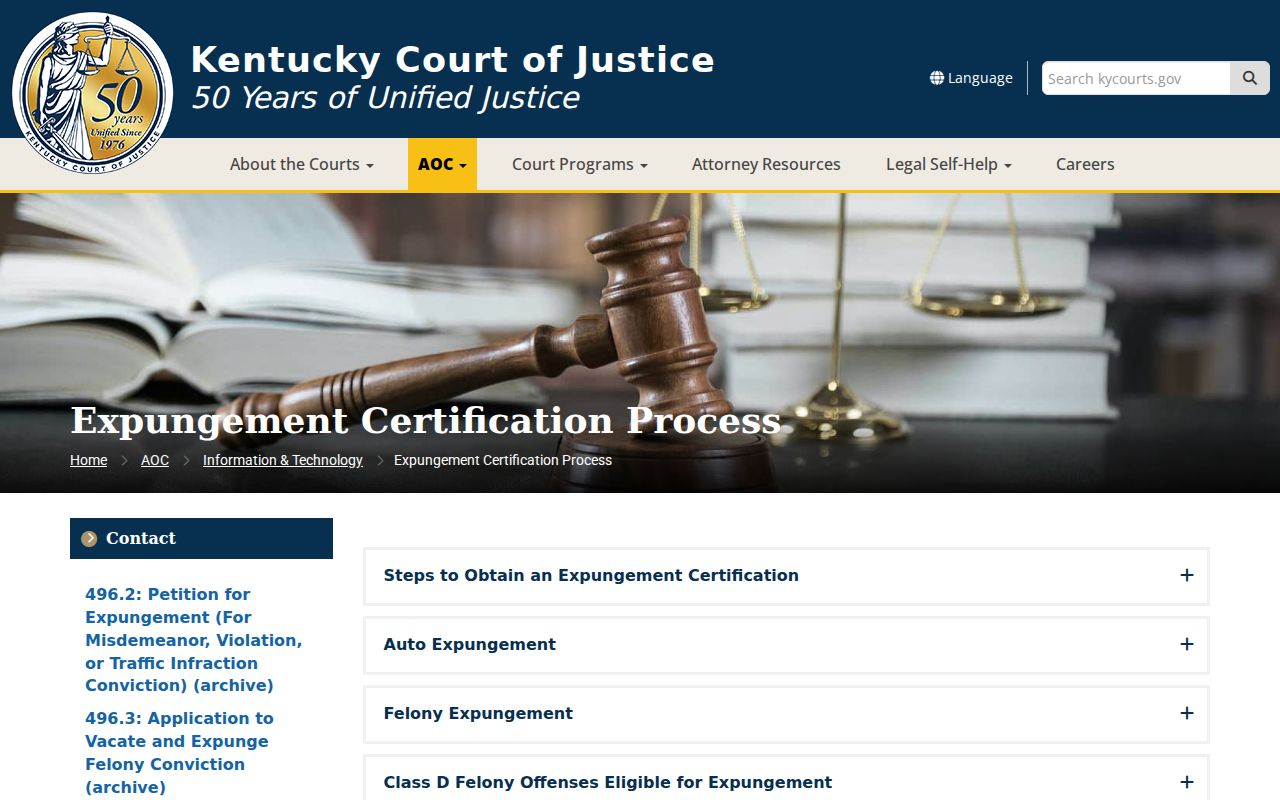
The source makes the county court order, not the statewide search screen, the controlling event.
Kentucky Supervision Record Trail
Kentucky probation and parole are state-run through the Department of Corrections Division of Probation and Parole. The division operates four regions, 20 districts, and 55 field offices serving every county. Its December 31, 2025 snapshot listed 46,358 active, community, and administrative cases. KOOL may show published supervision status or location, while the sentencing court holds the probation order and revocation docket. The Kentucky Parole Board handles parole decisions.
The KDOC Probation and Parole overview documents the statewide structure and current figures.
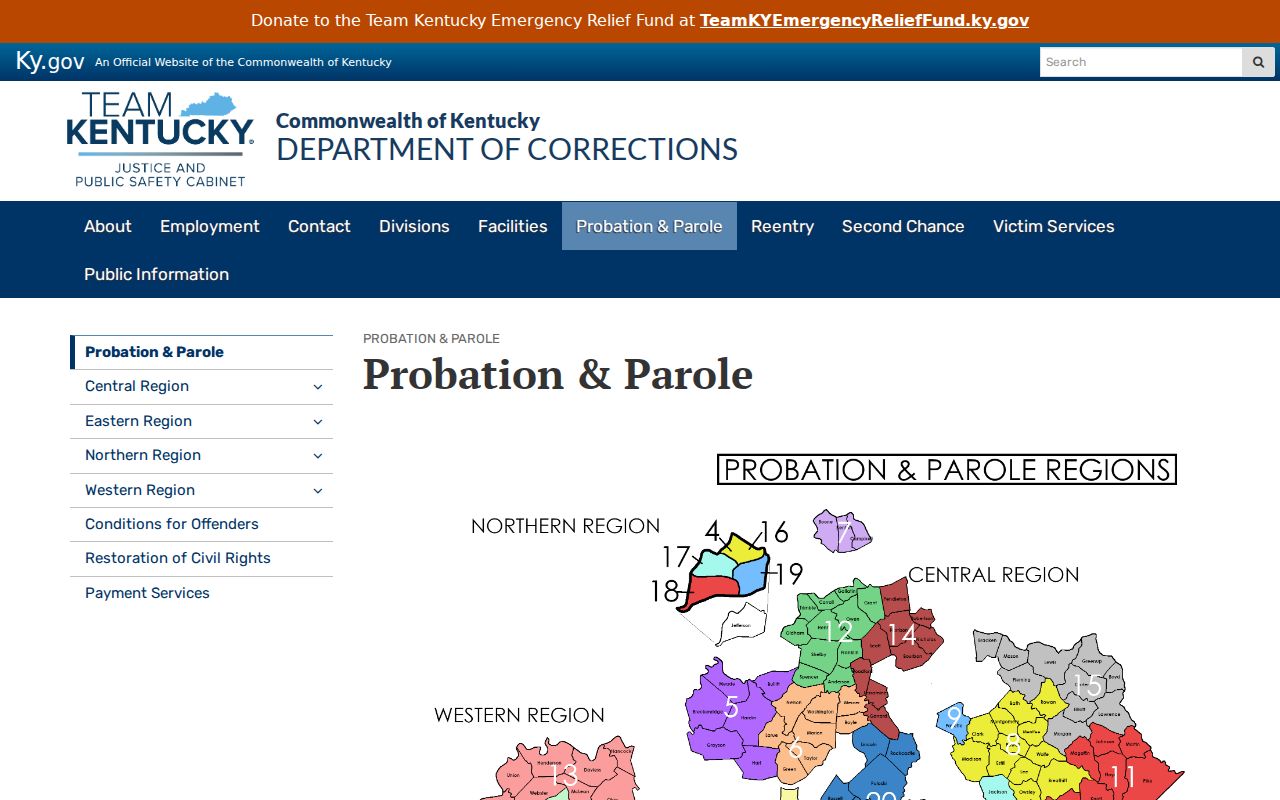
The division's statewide model is why a Kentucky search should route by KDOC district and sentencing county, not assume a county probation department.
Federal Records Beyond Kentucky
Kentucky repository and CourtNet results do not include the full federal layer. PACER provides federal dockets. The FBI offers a subject-only Identity History Summary. The Bureau of Prisons locator covers federal custody. Kentucky's federal trial courts are split between the Eastern and Western Districts, so a state court search cannot answer every federal case question.
The Federal Bureau of Prisons inmate locator is the official custody source outside KOOL.
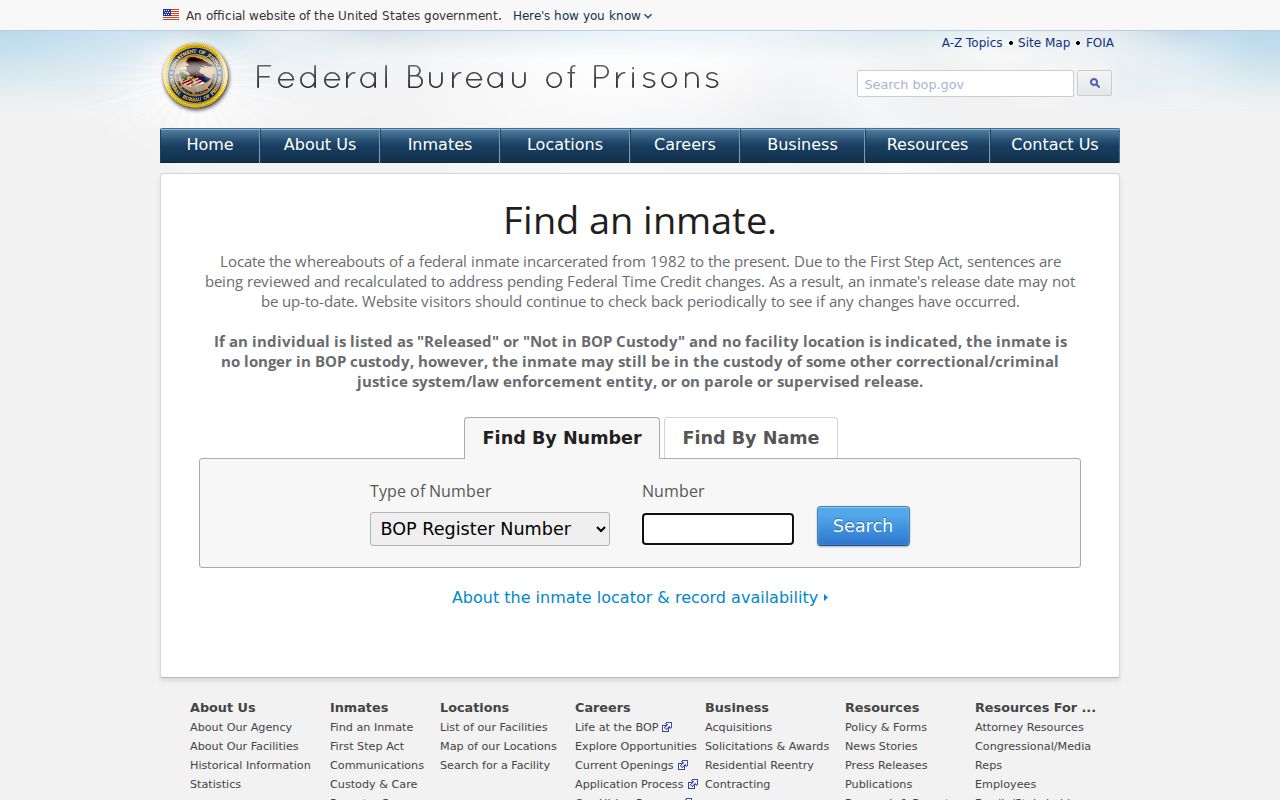
The federal locator demonstrates why a missing KOOL result does not rule out federal custody.
The Eastern District of Kentucky supplies one official federal court route.
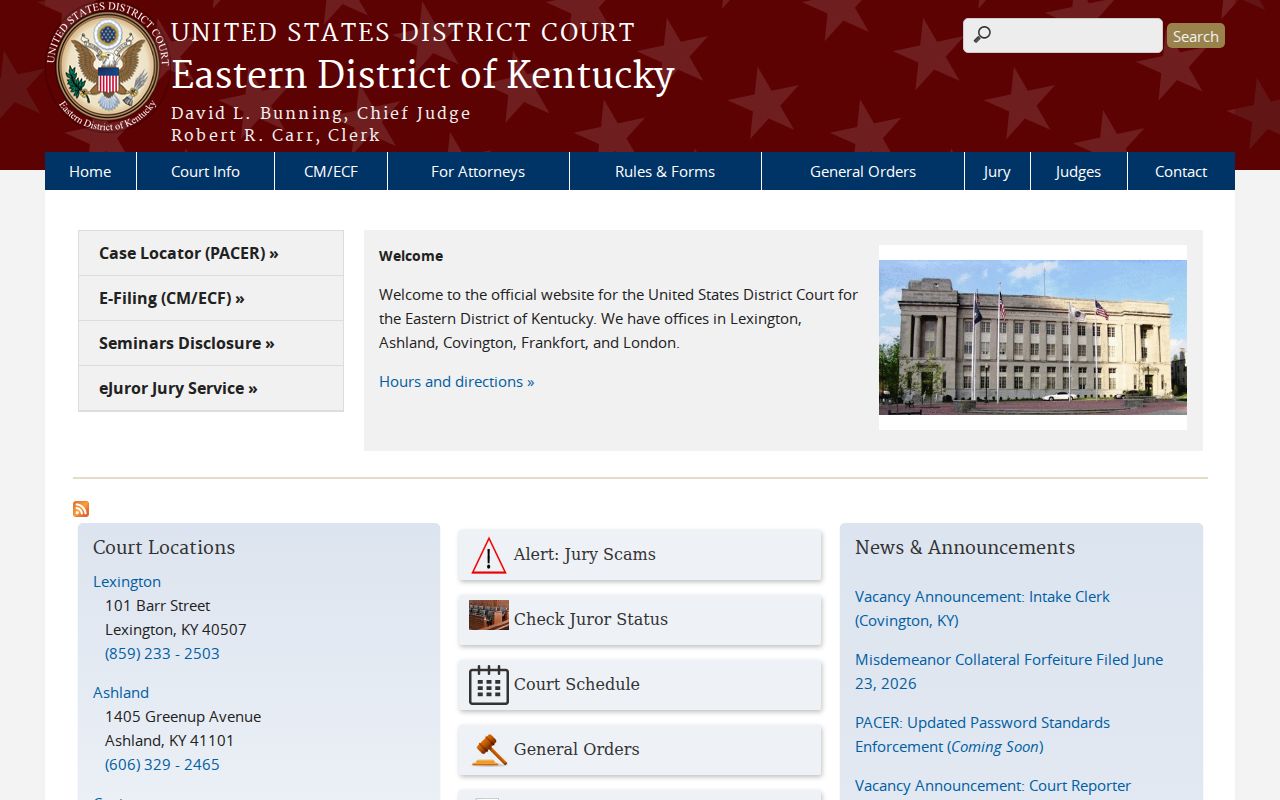
Its docket system belongs to the federal judiciary, not the Kentucky Court of Justice.
The Western District of Kentucky is the second federal trial court source.
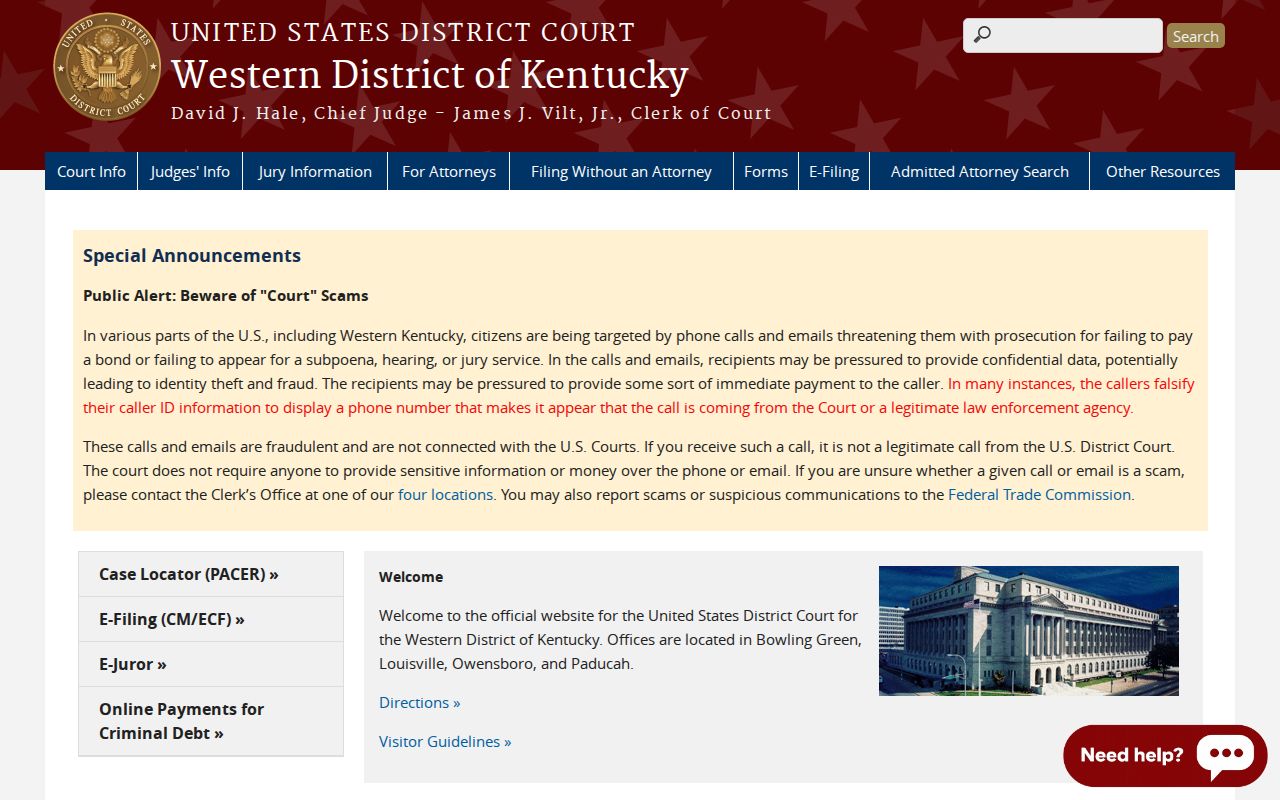
Together, the two districts show why Kentucky state and federal searches must remain separate.
Kentucky Record Fee Guide
Fees depend on the product and custodian. Check the current official form before paying because online surcharges and program-specific fingerprint totals can change.
| Item | Official amount |
|---|---|
| KSP adult name-based history | $20 |
| Local fingerprint capture add-on | Up to $10 |
| FBI direct Identity History Summary | $18 |
| AOC expungement certification | $40 |
| Eligible felony expungement | $50 filing plus $250 if granted |
| AOC online card surcharge | 2.25% or $2.50 minimum |
County court copies, certification, local reports, and special media may use a current local schedule. Ask the specific custodian for the charge before ordering.
Kentucky Criminal Records by County
Arrests, bookings, police reports, and signed case files originate in Kentucky's counties. The full directory routes to every local site. Featured metro counties include Jefferson, Fayette, Kenton, Boone, Warren, Hardin, Daviess, and Campbell. Their local systems differ, so one county's portal or copy fee should never be treated as a statewide rule.
Jefferson County
Louisville · Kentucky's largest county and highest-volume local record system
Fayette County
Lexington · Urban-county government and a major court docket
Kenton County
Covington and Independence · Northern Kentucky metro with dual seats
Boone County
Burlington · Fast-growing northern Kentucky county
Warren County
Bowling Green · South-central regional court and jail hub
Hardin County
Elizabethtown · Fort Knox-area county with a large docket
Daviess County
Owensboro · Western Kentucky detention and court hub
Campbell County
Alexandria and Newport · Northern Kentucky metro with dual seats
Browse the full directory of all 120 Kentucky counties to reach the local criminal records site for any county.